Why Your Coin Collection Still Doesn’t Feel Right? Understanding Common Mistakes

A confused collector looks at the bunch of coins dropped at the desk.

Many people begin coin collecting with excitement, only to discover later that something feels incomplete or unfocused. A collection can grow in size yet fail to deliver satisfaction, clarity, or progress. Your technique, physical tools or a coin scanner app are likely to be alright — it might be psychological reasons that keep you unsatisfied.

Let’s analyse personal motivations, tendencies, and habits to decide if coin collecting matches your mindset—or why your current approach feels misaligned.

A confused collector looks at the bunch of coins dropped at the desk.

The Hidden Psychological Drivers

Coin collecting appeals to several psychological patterns that shape long-term enjoyment:

1. The Need for Structure and Meaning

People who enjoy turning scattered information into order often thrive in numismatics. Cataloging, labeling, and building chronology give each decision a purpose. A lack of structure, on the other hand, results in random purchases that drain motivation.

2. Curiosity for Small Details

Successful collectors enjoy examining clues: mint marks, subtle varieties, design transitions, or composition changes across decades. If small discoveries energize you, the hobby aligns naturally with your cognitive preferences.

3. Comfort With Slow Progress

Coin collecting rewards patience. Rare dates may take months to find, and research requires consistent attention. Individuals who appreciate steady progress often feel more fulfilled than those expecting quick excitement.

Common Early Disconnects

Beginners often experience a mismatch between expectation and outcome. These early obstacles reveal a lot about psychological fit:

  • Buying Without a Theme: Trend-driven collecting feels exciting at first but creates a set with no identity.
  • Relying on Impulse: Rushed buys lead to overpaying, fakes, and regret.
  • Ignoring Documentation: Unrecorded coins lose context, making the collection feel chaotic.
  • Improper Handling: Damaged surfaces turn enthusiasm into frustration.
  • Chasing Every Trend: Following the crowd erodes personal satisfaction.

These issues are not signs that the hobby is wrong for you. They often indicate a disconnect between personality and collecting style. Once motivations are clarified, collecting becomes more rewarding and strategic.

Motivations, Mindset Alignment, and the Mistakes That Hold Collectors Back

A strong psychological fit shapes the way collectors plan, research, and maintain their sets. When motivation aligns with structure, coin collecting becomes both enjoyable and sustainable. When the alignment is weak, even a large collection may feel disorganized or disconnected.

1. Desire for Completion

Many collectors feel energized by filling gaps. Completing a date run, finishing a mint-mark set, or building a themed timeline creates a steady sense of progress. This motivation suits individuals who enjoy long-term projects with clear goals, and makes the coin value of each piece specific and irreplaceable.

2. Attraction to History

Some collectors see coins as entry points to real events. A wartime nickel or a monarch portrait offers tangible connection to the past. People with strong historical curiosity often build collections that feel personal and meaningful.

3. Search for Rarity and Strategy

For analytical thinkers, scarcity becomes the challenge. They enjoy studying mintage data, comparing prices, and tracking small varieties. The thrill comes from identifying opportunities at the right moment.

How to Identify Your Psychological Fit

A few indicators show natural alignment with numismatics:

  • Research Feels Rewarding: You enjoy learning specifications, reading about mint history, and comparing variations.
  • Organization Comes Naturally: Cataloging, labeling, and creating order feel calming rather than demanding.
  • Details Capture Your Attention: You notice subtle differences and enjoy understanding them.
  • You Prefer Steady Growth: Gradual improvement in a collection brings more satisfaction than fast buying.

These signs show compatibility with the methodical pace of coin collecting.

Mistakes That Create Psychological Friction

When motivation and behavior fall out of sync, collecting feels less enjoyable. Common issues include:

  • No Theme or Focus: The collection grows without narrative, creating a scattered look.
  • Improper Storage and Handling: Fingerprints, humidity, or PVC holders cause long-term damage that undermines pride in the collection.
  • Impulse Purchases: Buying without research leads to overpaying, fakes, or disappointment.
  • Lack of Documentation: Without records, coins lose context and value becomes unclear.

Digital tools help reduce these mistakes. The Coin ID Scanner app supports clear structure through photo identification, detailed coin data, and a digital collection manager. Its database of more than 187,000 coins and AI Coin Helper make research straightforward, limiting errors tied to impulse or uncertainty.

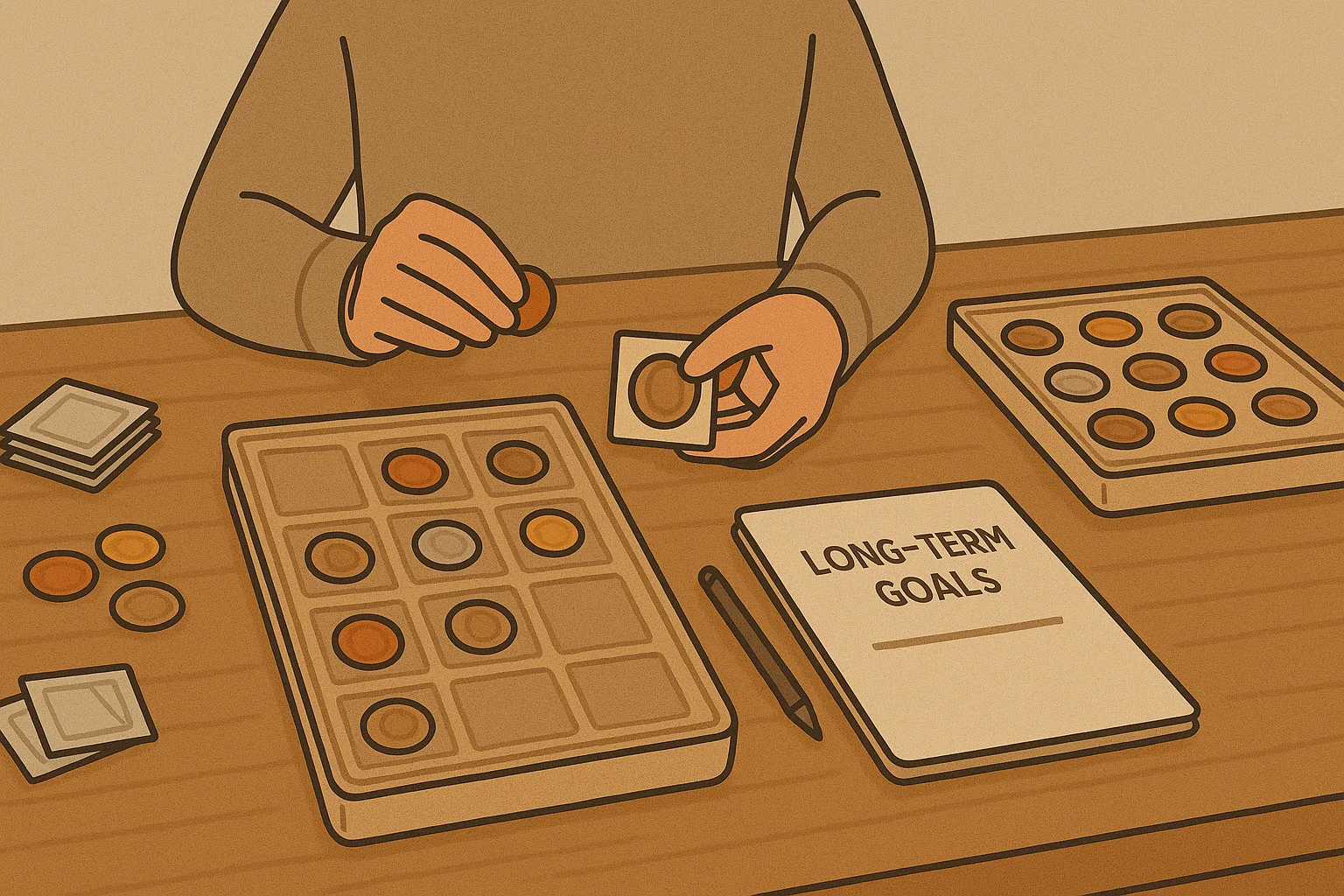
A collector neatly sorts his collection and makes long-term plans for his hobby.

Psychological Obstacles, Corrective Strategies, and Final Evaluation

Even collectors with strong motivation face psychological traps that disrupt progress and enjoyment. Understanding these obstacles helps refine habits, protect value, and restore clarity within the collection.

1. Hedonic Adaptation

The thrill of a new coin fades quickly. Without a deeper purpose or theme, each purchase feels exciting only for a moment. This effect pushes collectors toward constant buying rather than thoughtful curation. The best fix is to build meaning into the collection through themes and long-term goals.

2. Mismatched Motivations

Some individuals enter the hobby for reasons that conflict with their natural habits. For example:

  • A detail-oriented person trapped in trend chasing
  • A historically minded collector stuck buying modern hype pieces
  • A strategist focusing on low-value bulk lots

When collecting behavior conflicts with personality, frustration grows. Re-evaluating motivations brings alignment back into the process.

3. Perfectionism

Coins are physical objects with imperfections. Expecting flawless surfaces or instant progress leads to discouragement. Perfectionism also drives unnecessary upgrades and financial strain. Balanced expectations help maintain steady growth.

Corrective Strategies to Improve Satisfaction

A few adjustments elevate a collection from scattered to purposeful:

  • Define a Theme: Focus on eras, countries, metals, portraits, or historical events.
  • Organize Properly: Record mint years, varieties, and purchase notes.
  • Improve Handling: Use gloves, acid-free holders, and dry storage conditions.
  • Research Before Buying: Compare price guides, grades, and similar sales.
  • Set Clear Budgets: Prevent emotional or impulse purchases.
  • Use Digital Tools Wisely: The best coin identifier app streamlines documentation and verification.

The Coin ID Scanner app supports these habits by identifying coins through photos, providing key specifications, and maintaining an organized digital collection. Its large database and smart features reduce guesswork, making the hobby manageable for beginners and structured for experienced collectors.

Final Evaluation: Does Coin Collecting Fit You?

Coin collecting suits individuals who enjoy order, research, and gradual achievement. The hobby becomes fulfilling when each coin contributes to a clear narrative or long-term project. With the right psychological fit—and with habits that match that mindset—collecting evolves from a confusing pile of coins into a meaningful, growing archive of history.

For those who refine their approach, stay organized, and align collecting with personal motivations, numismatics becomes a rewarding part of life that offers lasting engagement and steady satisfaction.

Cross-browser Compatibility with Modern Frameworks

Understanding Cross-Browser Compatibility

Cross-browser compatibility is an essential aspect of web development, ensuring that websites render correctly across all major browsers without requiring significant changes to the codebase. This challenge arises from the fact that different browsers interpret HTML, CSS, and JavaScript differently due to variations in their engines (such as Blink, WebKit, Trident, and Gecko). Achieving cross-browser compatibility involves a deep understanding of these differences and how they impact website functionality.

One of the primary hurdles developers face is the varying support for new web technologies. As modern browsers like Chrome, Firefox, Safari, and Edge continuously update to include new features and performance optimizations, older versions may lag behind in terms of feature support. This can lead to inconsistencies where certain elements or functionalities work perfectly on one browser but fail to display correctly on another. To address this, developers must often employ fallback techniques or polyfills that provide alternative implementations for unsupported features.

Another critical factor is the use of vendor prefixes, which were initially introduced by browser vendors like Apple (Safari), Mozilla (Firefox), and Google (Chrome) to implement new CSS properties before they became standardized. While these prefixes have largely been phased out in favor of standard CSS3 syntax, there are still instances where legacy browsers might require specific prefix handling. This necessitates meticulous testing across different versions to ensure compatibility and functionality for all users, regardless of their preferred browser.

Leveraging Modern Frameworks

Modern web frameworks such as React, Angular, and Vue.js offer powerful tools and libraries that simplify the process of achieving cross-browser compatibility. These frameworks abstract much of the complexity associated with directly manipulating DOM elements and managing state, allowing developers to focus on building dynamic user interfaces without worrying about browser inconsistencies.

React, in particular, is renowned for its component-based architecture, which promotes reusability and maintainability across different environments. By encapsulating UI logic within components, React ensures that each part of the application functions consistently regardless of the underlying browser. Additionally, React’s virtual DOM minimizes direct interactions with the actual document object model (DOM), reducing potential conflicts between browsers.

Angular, on the other hand, provides a comprehensive suite of tools for building large-scale applications. Its two-way data binding and dependency injection mechanisms help maintain coherence across different browsers by ensuring that all components are updated simultaneously without manual intervention. Angular’s extensive ecosystem also includes numerous third-party modules designed to bridge gaps in support between browsers, further enhancing cross-browser compatibility.

Vue.js combines the simplicity of React with the robustness of Angular, offering a flexible and lightweight framework suitable for both small-scale projects and complex applications. Vue’s reactivity system allows developers to track changes efficiently across various browser environments, ensuring that UI updates are synchronized without causing performance bottlenecks or rendering issues. Furthermore, Vue’s community-driven ecosystem offers numerous plugins and directives specifically designed to address cross-browser challenges, making it easier to implement consistent behavior across all browsers.

Importance of Responsive Design

Responsive design is crucial for ensuring that websites adapt seamlessly to different screen sizes, resolutions, and orientations—key considerations when addressing cross-browser compatibility. With the proliferation of mobile devices and tablets, users expect a uniform experience regardless of their choice of browser or device type. This requires developers to adopt flexible layouts and adaptive content strategies that cater to diverse user needs.

CSS media queries form the backbone of responsive design by enabling conditional styling based on screen dimensions and capabilities. By defining breakpoints at specific width thresholds, designers can apply targeted styles that enhance readability and usability for smaller screens without compromising functionality. This approach ensures that elements such as images, buttons, and text align properly across various devices while maintaining a visually appealing appearance.

Another critical aspect of responsive design is the use of flexible grid systems. Grid-based layouts provide a structured foundation for arranging content dynamically based on available space, allowing developers to create adaptive interfaces that adjust fluidly according to browser size and orientation. Frameworks like Bootstrap and Foundation offer pre-built grid templates that simplify this process while ensuring cross-browser consistency through standardized stylesheets and polyfills.

Testing Strategies for Cross-Browser Compatibility

Effective testing strategies are indispensable for verifying cross-browser compatibility and identifying potential issues early in the development cycle. Manual testing involves inspecting websites across multiple browsers and devices to ensure consistent behavior and appearance. This approach requires thorough scrutiny of various elements, including layout alignment, form validation, interactive features, and performance metrics.

Automated testing tools like Selenium WebDriver provide a scalable solution for simulating user interactions and verifying cross-browser compatibility without manual intervention. These tools enable developers to script test cases that can be executed across different browsers, facilitating comprehensive coverage and reducing the likelihood of overlooked issues. Additionally, automated tests can be integrated into continuous integration (CI) pipelines to ensure ongoing compatibility as new features are added.

Browser testing services like BrowserStack and Sauce Labs offer virtual environments that emulate real-world conditions, enabling developers to test websites on a wide range of devices and browsers without requiring physical access to each platform. These platforms support remote debugging and performance monitoring, providing detailed insights into potential bottlenecks or inconsistencies across different browser versions. By leveraging these tools, developers can identify and resolve cross-browser compatibility issues more efficiently while maintaining consistent user experiences.

Embracing Progressive Web Apps (PWAs)

Progressive web apps (PWAs) represent a significant advancement in web development, offering seamless integration between mobile applications and traditional websites through enhanced capabilities like push notifications, offline access, and native-like performance. PWAs leverage the power of modern frameworks to deliver highly functional and visually appealing experiences that transcend browser limitations.

One key feature of PWAs is their ability to function effectively regardless of user environment or device constraints. By utilizing service workers—a JavaScript API for taking control over network requests—PWAs can cache resources locally, ensuring consistent performance even when users are offline. This capability significantly enhances cross-browser compatibility by providing a uniform experience across different browsers and devices.

Another advantage of PWAs is their ability to leverage native features without requiring installation through app stores. Through the use of web APIs, PWAs can access device-specific functionalities such as camera access, geolocation services, and push notifications, enriching user experiences while maintaining cross-browser consistency. This integration ensures that users enjoy a consistent and engaging experience regardless of their chosen browser or operating system.

Ensuring Security in Cross-Browser Compatibility

Security is an integral aspect of any web development project, especially when striving for cross-browser compatibility. Modern browsers prioritize security through various mechanisms like content security policies (CSP), HTTP strict transport security (HSTS), and subresource integrity checks to protect against common threats such as XSS attacks, data breaches, and unauthorized access.

Content Security Policy (CSP) is a powerful tool that helps prevent cross-site scripting (XSS) and other code injection attacks by defining which resources are permitted to be loaded. By specifying allowed sources for scripts, stylesheets, and other elements, CSP ensures that only trusted content can interact with the website, reducing vulnerability across different browsers. Implementing CSP requires careful configuration tailored to each application’s specific requirements but provides robust protection against malicious activities.

HTTP Strict Transport Security (HSTS) further enhances security by enforcing encrypted connections between servers and clients, preventing man-in-the-middle attacks. HSTS instructs browsers to always use HTTPS for all requests from the same origin, even if users initially attempt to access an unsecured HTTP URL. This mechanism ensures consistent security measures across different browser versions while protecting sensitive data transmission.

Subresource Integrity (SRI) adds another layer of protection by verifying the integrity of external resources loaded into a web page. By embedding cryptographic hashes within HTML links or script tags, SRI allows browsers to confirm that downloaded assets match expected values before execution. This approach mitigates risks associated with compromised third-party libraries and ensures consistent security practices across various browser environments.

Copyright 2025 All rights reserved. IntBiz Support©